
Immune Regulation of Tendon Regeneration
About the Project
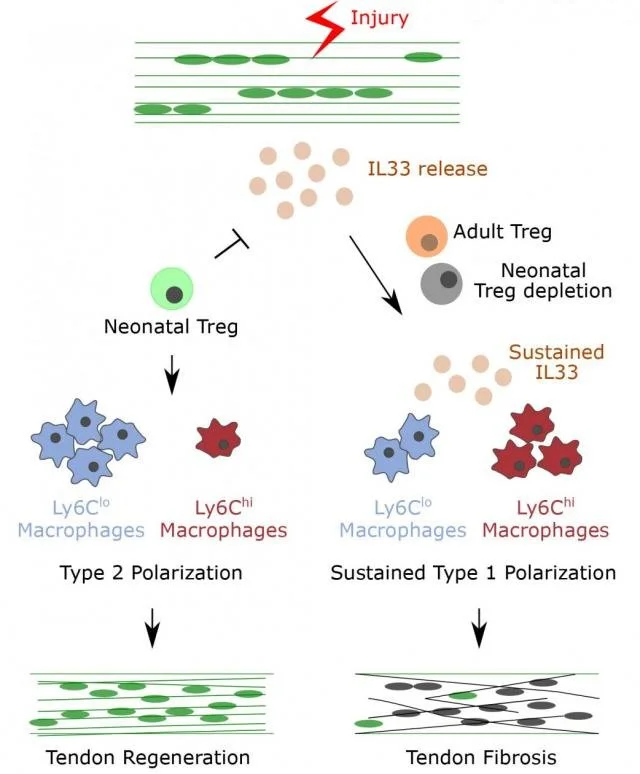
Effective wound regeneration depends on an orchestrated immune response, however how the immune system regulates tendon regeneration vs fibrosis has not been mechanistically determined. Wound healing is initiated by a pro-inflammatory response that is then resolved by anti-inflammatory signals. While most studies focus on macrophages, other immune cells such as T cells also regulate immune polarization and wound healing. Using our models of neonatal tendon regeneration and adult scar formation, our research focus on identifying the mechanisms of specific immune cell populations in tendon healing and direct interactions between immune cells and tenocytes. We have demonstrated dysregulated immune polarization in adult healing that is mediated by over-active IL-33 signaling due to minimal recruitment of regulatory T cells (Tregs) in adults. Depletion of Tregs results in failed neonatal tendon regeneration while adoptive transfer of neonatal Tregs results in improved adult tendon healing. Identifying the mechanisms underlying immune regulation of tendon healing will enable development of immunomodulatory therapeutics to regenerate adult tendons after injury.
Related Publications
Arvind, V., Crosio, G., Howell, K., Zhang, H., Montero, A., & Huang, A. H., Functional tendon regeneration is driven by regulatory T cells and IL-33 signaling.Sci. Adv. 11, eadn5409 (2025). DOI:10.1126/sciadv.adn5409
Crosio, G., King, E. R., & Huang, A. H. (2025). Regenerative potential of neonatal tendons is regulated by intrinsic resistance to inflammation and supportive T-cell–secreted factors. FASEB Journal, 39(20), e71144. https://doi.org/10.1096/fj.202500544R
Funding sources
NIAMS R01AR081674
NIDCR R01DE035315